
Get a Customized Retaining Wall that Enhances Your Outdoor Space
Make your landscape captivating with our expert retaining wall installation services. Our team is dedicated to creating stunning designs that enhance both the beauty and functionality of your property. Trust us to elevate your property with quality craftsmanship and personalized solutions.
Explore Our Range of Retaining Wall Styles for Every Aesthetic
We offer a wide selection of retaining wall styles to suit any outdoor space. Whether you prefer a traditional look or a modern design, we have the expertise to bring your vision to life.
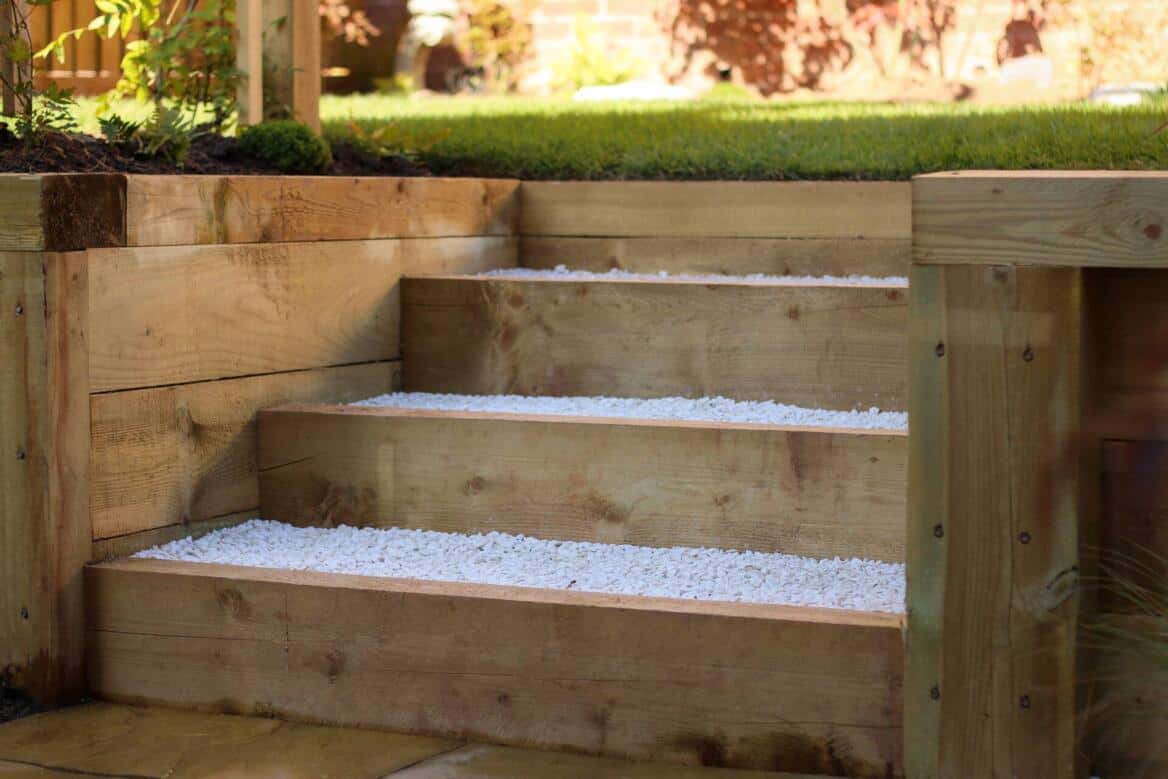
Timber Retaining Walls
Timber retaining walls have a natural aesthetic, blending seamlessly with the surroundings to create a more warm and organic look than concrete or brick.
Timber walls offer more flexible shaping on-site to accommodate curves and unique layouts that are more challenging to achieve with stone, concrete, or brick. This leads to a more tailored and visually appealing final product.
They are more budget-friendly than stone or brick alternatives both up-front and over time since worn out timber sections can often be replaced individually without the need for extensive reconstruction.

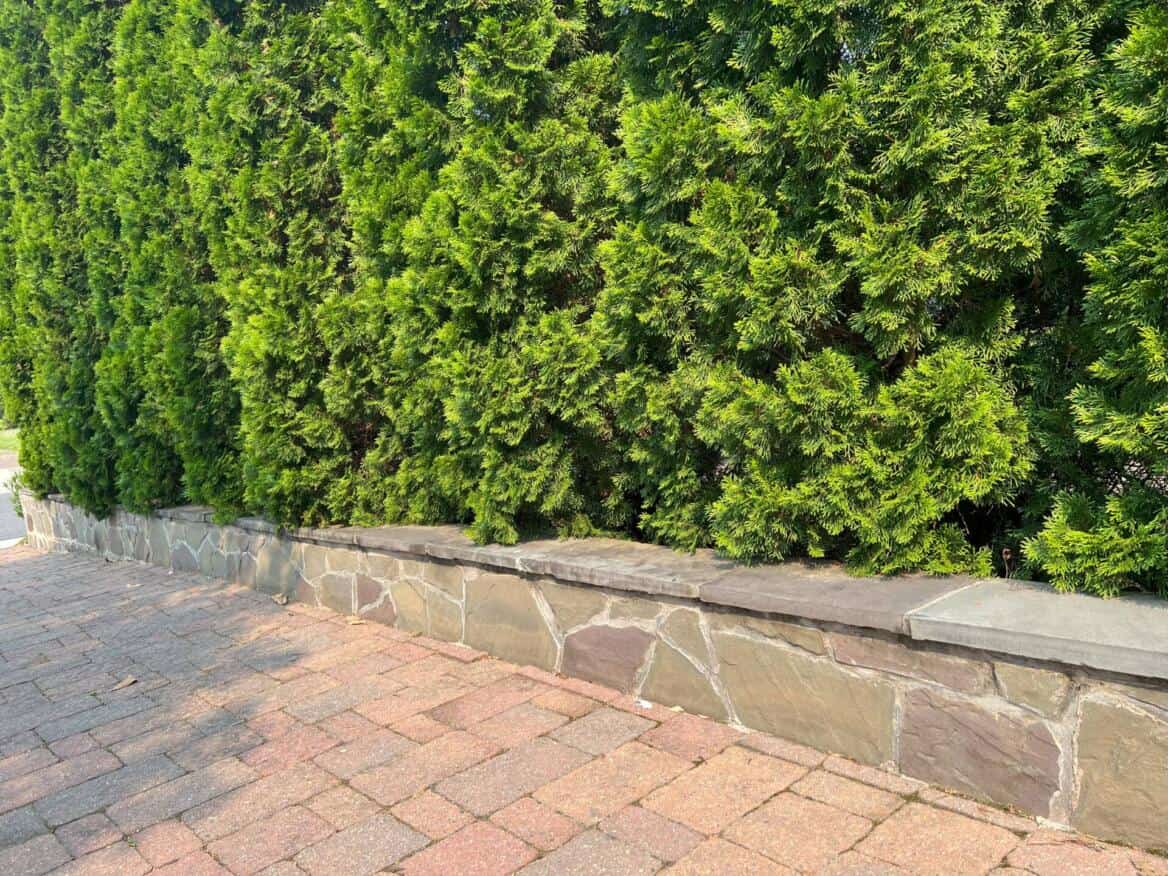
Stone and Mortar Retaining Walls
Stone-and-mortar walls have a timeless and classic look. And since stone is durable especially when mortared, they provide long-lasting support for heavy amounts of soil and preventing erosion.
These walls can be customized in terms of size, shape, and color, allowing us to create a unique design that complements your landscaping.

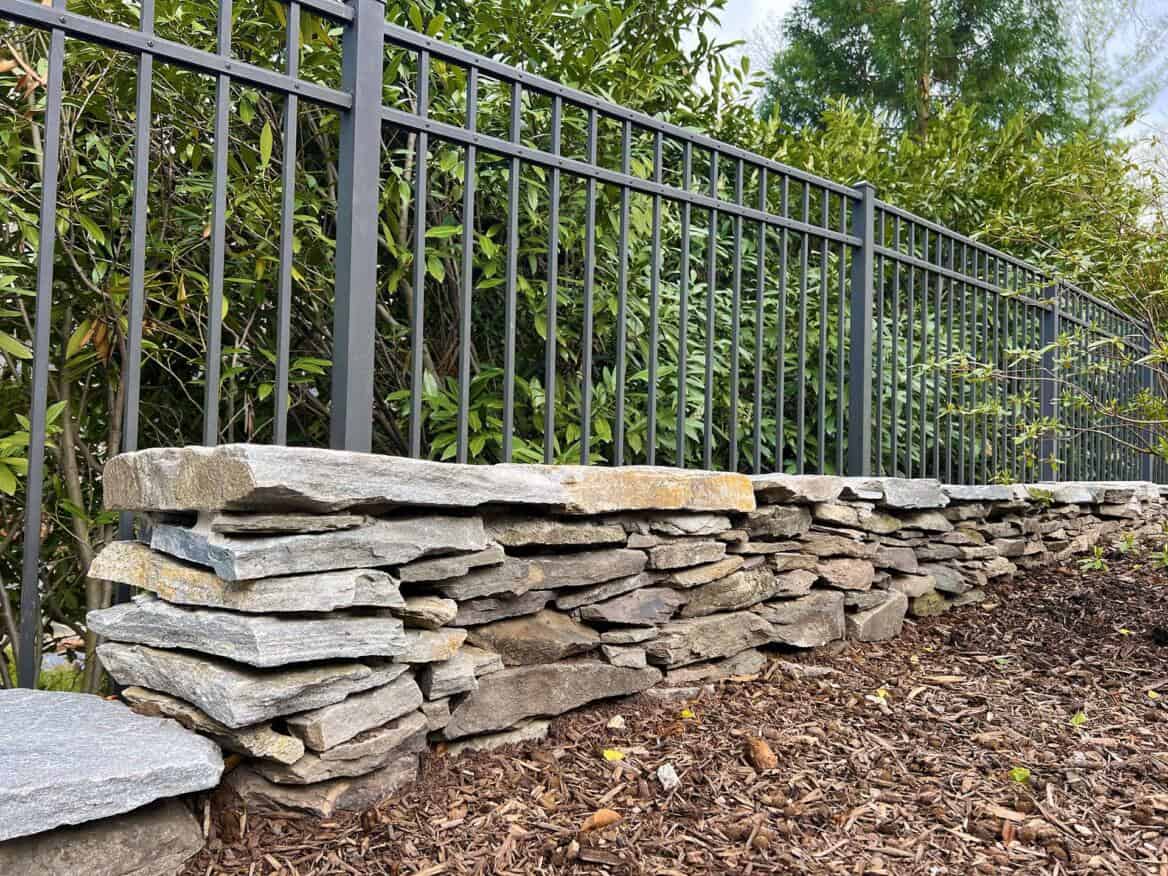
Dry Stacked Retaining Walls
Dry-stack retaining walls popular choice for many of our clients because of their natural appearance and simplicity. Zero mortar or adhesive means that they are more flexible and less likely to crack or fail over time. They are also less expensive to build.
While not as strong as other types of retaining walls, these walls are great for low-height uses such as flower beds and garden edges.
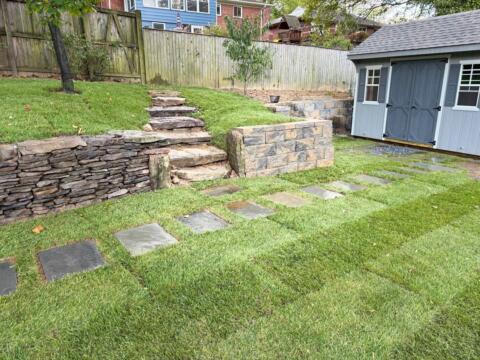
While stone is pictured here, we can dry-stack concrete blocks, or even wood. Each material offers a different aesthetic and level of durability, so it is important to choose a style that fits the overall design and function of the wall.
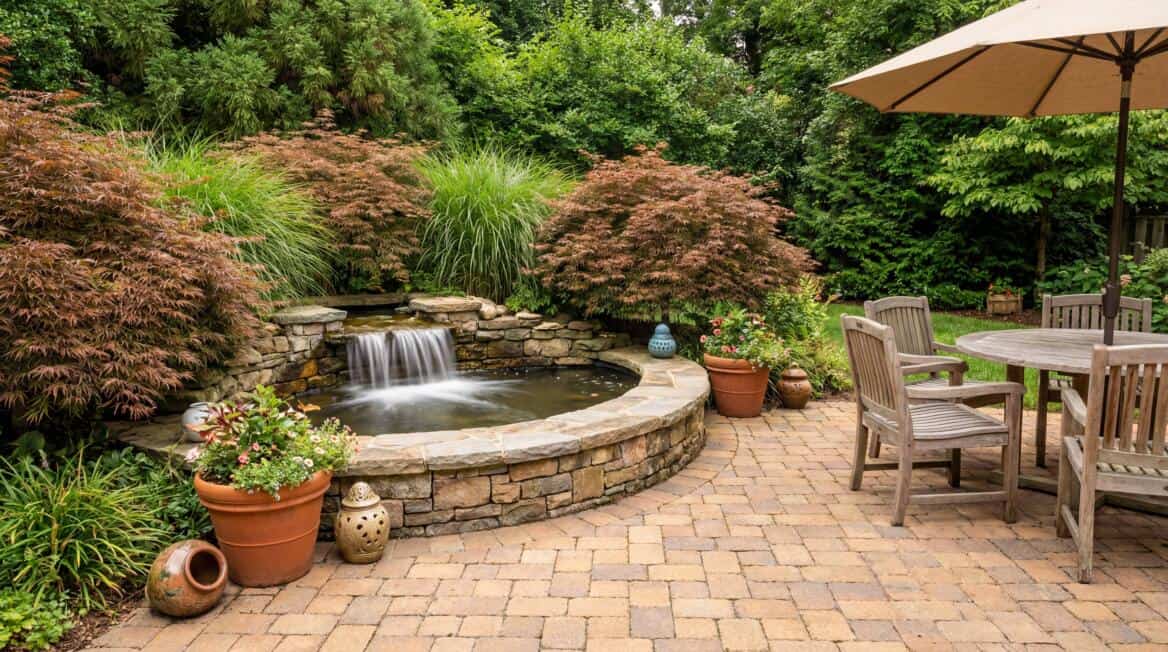
Paver Retaining Walls
Our paver retaining walls are built to last, providing both functionality and elegance to any landscape.
With a variety of colors, textures, and sizes to choose from, you can customize your wall to perfectly complement your unique vision while creating more useable space.
Whether you’re looking to create a cozy seating area or define your garden borders, our paver retaining walls offer endless possibilities for a beautifully designed outdoor living space.


Real Results: Case Studies Showcasing Our Expertise in Retaining Wall Construction
Case Studies
From challenging terrains to custom designs, our case studies highlight the versatility and creativity of our retaining wall solutions. Get inspired by the transformations and success stories of our satisfied clients.
- Dream Outdoor Space in Cleveland Park
We completely rebuilt this Cleveland Park client's outdated patio and garden from scratch. You'll see what they were working with beforehand, the plan we presented to them (3D renders included),…
See how we did it
- Hardscaping and Sod in Silver Spring
A comprehensive landscape transformation featuring dry-stacked stone walls, custom walkways, and drainage solutions to tackle erosion on a challenging Silver Spring slope.
See how we did it
- Plants, River Rock, and Artificial Turf in Palisades
See how we turned a sloped Palisades backyard into a practical, green retreat with plantings, river rock, and artificial turf—low upkeep, big impact.
See how we did it


Our Associations & Memberships



Ready to get started?
Still have questions? We've got answers.
What warranties do you provide on retaining wall installations and repairs?
We stand behind our craftsmanship and the quality of the work we perform. Because retaining wall projects can vary significantly in materials, construction methods, existing conditions, and the type of work being completed, warranty coverage depends on the individual project.
For new retaining walls, we warranty our craftsmanship based on the scope and construction of the wall. The specific warranty that applies to your project will be clearly explained as part of your proposal.What does cleanup and site restoration include?
Retaining wall construction involves excavation, heavy materials, and equipment, so cleanup and restoration are an important part of finishing the project.
At the end of the work, we remove construction debris and leave the work area clean. Depending on the scope of the project, restoration may also include final grading, replacing soil, restoring disturbed lawn or planting areas, adding mulch, seed, or sod, and cleaning nearby paved surfaces affected by construction.
The specific restoration work included with your project will be outlined in your proposal so you know what to expect when the job is complete.
How long does a retaining wall last?
A well-built retaining wall can last a lifetime—and a properly constructed stone wall can last much longer. There are stone walls and structures around the world that have stood for centuries, which speaks to the incredible longevity of this material.
But the material is only part of the equation. What happens underneath and behind the wall is just as important as what you see. A properly prepared base, good drainage, appropriate reinforcement, and quality construction all play a major role in how long a retaining wall will last.
Natural stone and masonry walls are among the longest-lasting options. Concrete block and other man-made retaining wall systems can also provide many years of service when properly installed.
Timber walls generally have a shorter lifespan. Even pressure-treated wood will eventually deteriorate from constant exposure to soil and moisture. Timber can still be a good option depending on the application and budget, but it’s important to understand the long-term difference between materials.
Retaining walls are a significant investment, so we build with more than the finished appearance in mind. We want the wall to perform well for years—and hopefully generations—to come.
How much does a retaining wall cost?
Retaining walls can be one of the more significant investments you make in your landscape. Unlike many landscape features, much of the work—and cost—is in what you don’t see: excavation, base preparation, drainage, reinforcement, backfilling, and the labor required to build the wall correctly.
The final cost depends on the height and length of the wall, site access, soil conditions, drainage requirements, material selection, demolition of an existing wall, and whether engineering or permitting is required.
While retaining walls can be a substantial investment, they can also create one of the biggest “wow” factors on a property. A well-designed wall can completely reshape a sloped yard, create usable outdoor space, define planting and entertaining areas, and become an architectural feature of the landscape rather than simply something that holds back soil.
Material choice also makes a difference. Concrete block and other man-made retaining wall materials can create a clean, structured look, while natural stone can make the wall a major visual feature of the property.
Because every retaining wall is so site-specific, we evaluate the property before providing a price. This allows us to recommend a solution that makes sense for the site, your goals, and your budget—and gives you a realistic understanding of the investment before work begins.
Why is my existing retaining wall leaning or cracking?
A leaning, bowing, cracking, or separating retaining wall can be a sign of a larger issue behind or underneath the wall.
Water is a common culprit. When water becomes trapped in the soil behind a retaining wall, it creates pressure against the structure. Over time, inadequate drainage can contribute to movement, cracking, or bowing. This is particularly important in our area because many properties have dense, slow-draining clay soils.
Other causes can include movement at the footing or base, inadequate reinforcement, soil movement, or a wall that wasn’t designed to support the load behind it.
We evaluate both the visible damage and the conditions surrounding the wall so we can identify the likely cause before recommending a repair.
Can you repair my retaining wall, or does it need to be replaced?
Sometimes a retaining wall can be repaired; other times rebuilding is the better long-term solution.
If a stone or brick wall is structurally sound but has deteriorating mortar joints, for example, tuckpointing or other masonry repairs may be appropriate.
If the wall is leaning significantly, bowing, separating at the base, or showing signs of structural movement, repairing only the visible surface may not solve the underlying problem. The drainage, base, footing, or structural reinforcement may need to be addressed.
We assess the condition of the existing wall and explain whether a repair is appropriate or whether rebuilding part or all of the wall is likely to provide a more durable solution.
Do retaining walls need drainage?
Yes. Proper drainage is a critical part of retaining wall construction.
When water collects in the soil behind a wall, it creates pressure that pushes against the structure. Over time, that pressure can contribute to cracking, bowing, movement, or failure.
The appropriate drainage system depends on the type of wall and conditions of the property. It may include free-draining crushed stone behind the wall, geotextile filter fabric to help keep soil from clogging the drainage area, perforated drain pipe, and weep holes for certain types of masonry walls.
Drainage isn’t something we consider separately from the retaining wall—it is part of determining how the wall should be built for the conditions of the property.
Do I need a permit for a retaining wall?
It depends on the wall and the property. Permit and engineering requirements can vary based on the wall’s height, location, surrounding conditions, what the wall is supporting, and the jurisdiction where you live.
One of the first things we also need to confirm is who actually owns the land where the retaining wall will be built. This is especially important in Washington, DC, where the homeowner’s property line may not extend as far as they assume. In some cases, an area that appears to be part of the homeowner’s front or side yard may actually fall within public space or DC-owned property. Before moving forward with a wall, we need to verify that the proposed location is on the homeowner’s property or determine what additional approvals may be required.
Taller walls and walls supporting additional loads—such as a driveway, parking area, structure, or steep slope—may require engineered plans and municipal approval. Property lines, setbacks, easements, public space, and other local requirements can all come into play.
When a permit is required, you won’t be left to navigate the process on your own. We work in tandem with an experienced permit expediter who helps guide the application and approval process.
Our team stays actively involved alongside the homeowner and permit expediter, providing project information, addressing questions, and helping ensure that what is being submitted and approved aligns with the work that will ultimately be performed on your property.
Because we’re the team responsible for executing the work, we remain involved through the permitting process and into construction. Our goal is to make the process as straightforward as possible while ensuring everyone is working from the same approved plan.
How long does it take to build a retaining wall?
The construction timeline depends on the size and complexity of the wall, site access, excavation requirements, material selection, drainage and reinforcement needs, and whether demolition of an existing wall is required.
Permitting or engineering, when required, can also affect the overall project timeline before construction begins.
Once we’re able to evaluate the property and determine the scope of work, we can give you a more realistic expectation for your particular project rather than providing a general timeline that may not apply to your site.
What happens during the initial on-site consultation?
Our initial visit is about understanding both your goals and the conditions of your property.
We look at the existing grade and slope, drainage and water runoff, soil conditions, and the location of nearby driveways, patios, parking areas, or other structures. If you already have a retaining wall, we’ll evaluate its condition and look for signs of movement or drainage problems.
We also review access to the work area, since getting equipment and materials into a property can affect how a project is approached.
Most importantly, we’ll talk with you about what you’re trying to accomplish. A retaining wall may be solving a structural or drainage problem, but it can also create an opportunity to transform the landscape. We’ll discuss materials, appearance, function, and budget so the proposed solution works for both the property and the homeowner.
After evaluating the site, we prepare a proposal based on the recommended scope of work.
What happens if you encounter unexpected ground conditions?
Some underground conditions simply can’t be identified until excavation begins.
If we encounter unexpected conditions such as large buried rocks, bedrock, old foundations, buried concrete, or other obstructions that significantly change the work required, we’ll assess the situation before proceeding.
We’ll explain what we’ve found and discuss any additional equipment, labor, or changes to the project that may be necessary. If the condition changes the scope or cost of the project, we’ll review that with you before the additional work is performed.